
Direct answer
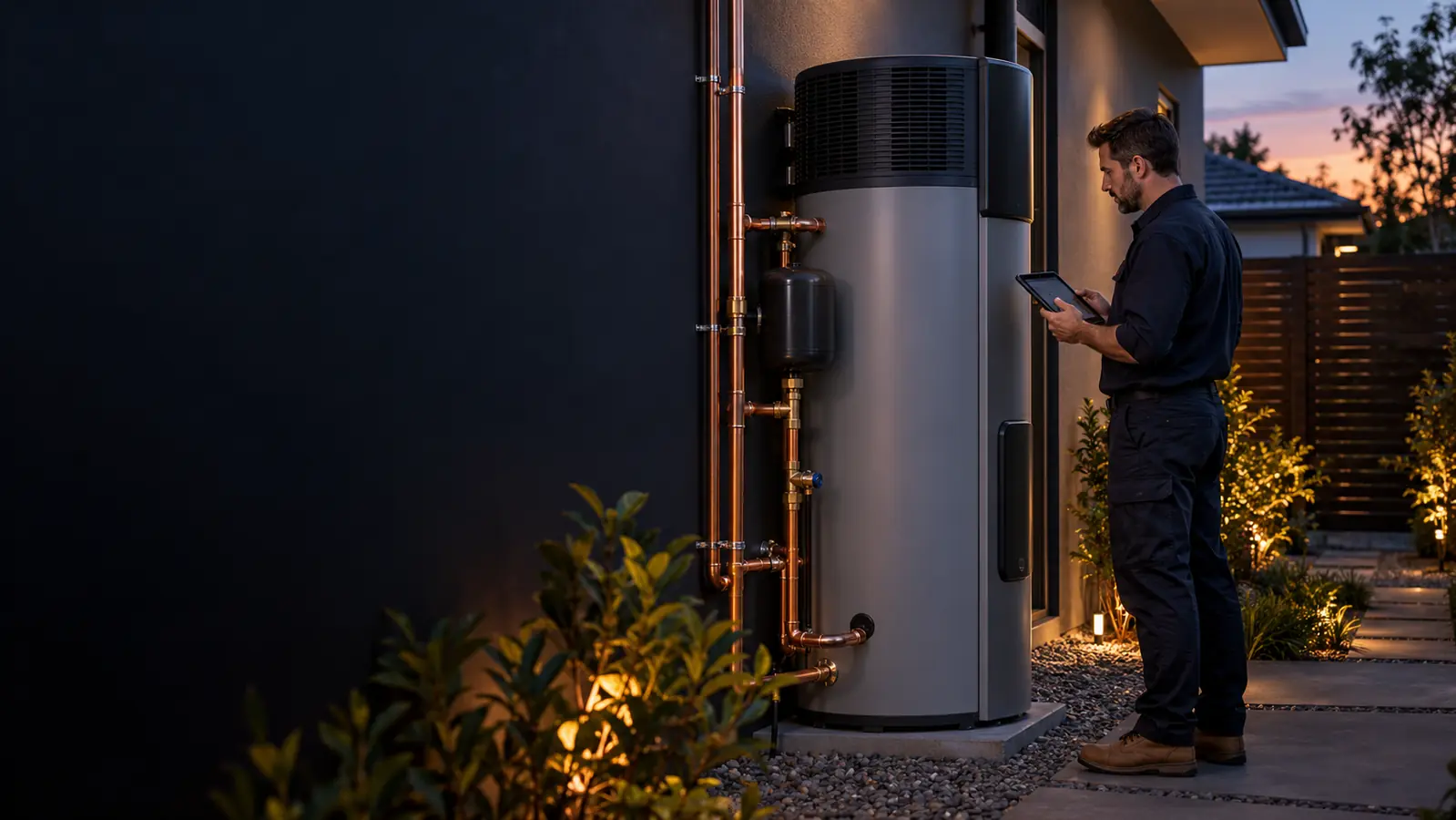
Water near a hot-water system may come from condensation, a connection, a relief discharge or a failed tank. Do not plug a relief outlet or repeatedly operate safety valves to stop it.
What can cause the problem or change the decision
| Possible factor | What to record safely |
|---|---|
| Loose or failed plumbing connection | Observe the source from a safe distance |
| Normal or abnormal relief discharge | Note whether flow is constant or only during heating |
| Tank corrosion or split cylinder | Check the manufacturer guide |
| Condensate from a heat pump or flue system | Keep clear of hot water and electrical parts |
Safe checks before professional work
- Observe the source from a safe distance
- Note whether flow is constant or only during heating
- Check the manufacturer guide
- Keep clear of hot water and electrical parts
Stop and get help
A rapidly leaking cylinder, hot discharge, gas smell or water near electricity needs urgent licensed assistance.
What information helps the next step
Timing
Note whether the symptom is constant, linked to rain, linked to a fixture or only at peak use.
Extent
List each affected outlet, room or inspection point without opening regulated components.
History
Keep previous invoices, camera footage, product model and renovation details.
Safety
State any gas smell, hot discharge, sewage, electrical proximity or structural movement immediately.
Frequently asked questions
Is this a complete DIY repair procedure?
No. It provides safe consumer observations and stops before regulated, hazardous or specialist work.
Which professional service matches this issue?
Start with Hot Water Plumber: What the Service Covers. The actual diagnosis may identify a different work category.
How can I plan the cost?
Use Hot Water Replacement Cost for sourced planning context, then compare written local quotes.